
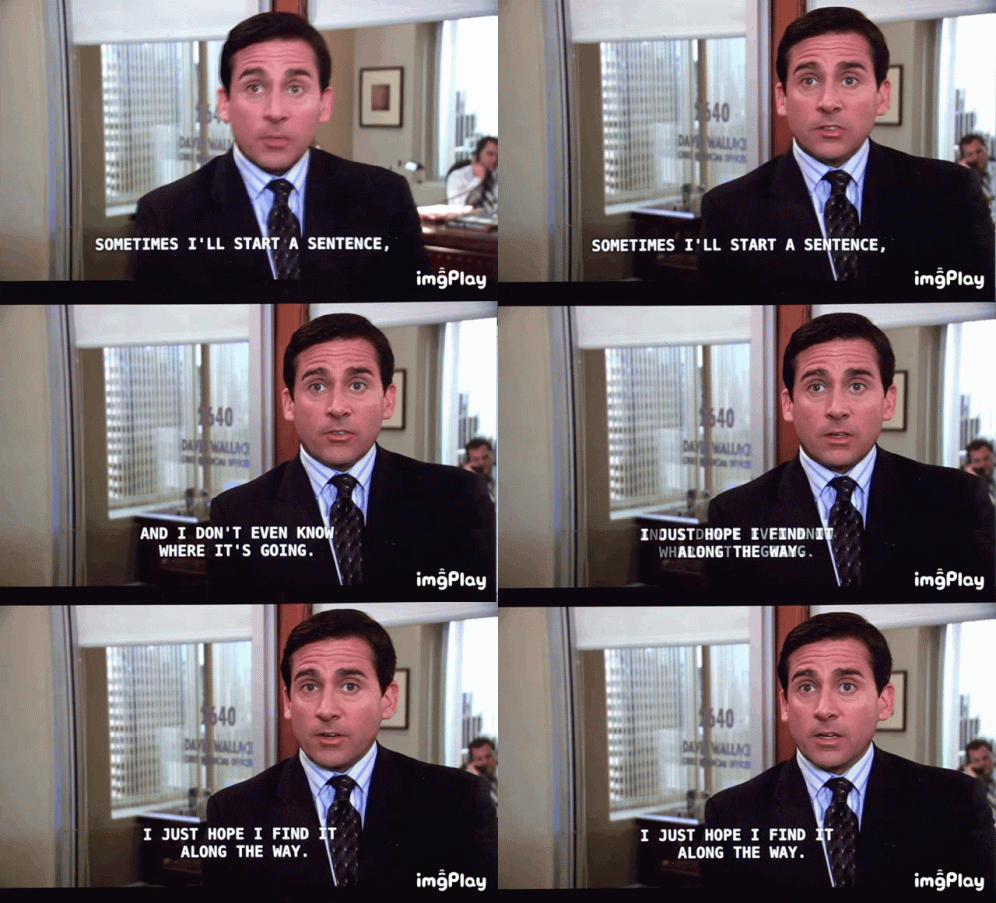
I’ve stopped believing that alignment means everyone agrees. Most of the time, it just means everyone thinks they understood the same thing.
In product conversations, we love to say, “Let’s get aligned.” It sounds mature. Kinda professional as well. But what we’re really saying is, “Let’s make sure we’re not talking about completely different things.” Because we almost always are.
I’ve seen this play out a hundred times. An engineer nodding while a PM explains a requirement, both convinced they’re aligned. One is thinking about how the API will behave; the other is thinking about what the user will see. And two weeks later, both are frustrated, wondering how it “fell through the cracks.” It didn’t. It just got lost in translation.
Alignment is not about agreement. It’s about interpretation. Every role, every function, has its own native language, one shaped by incentives, responsibilities, and fears. Engineers speak precision. Designers speak empathy. PMs speak trade-offs. Executives speak outcomes. And most alignment problems come from assuming everyone’s fluent in everyone else’s dialect.
I’ve been guilty of this too.
I’ve walked out of meetings feeling like, “Great, we’re aligned,” only to realize later that people aligned to my meaning, not theirs. I used to think the fix was more documentation, more clarity. But it’s not. It’s humility. It’s slowing down to ask, “What does this mean to you?” and actually listening to the answer.
The best teams I’ve seen don’t rush alignment. They translate in real time. They ask dumb questions. In fact, over the years, I’ve learned to be okay with sounding dumb, even when a junior engineer looks at me surprised that I’m asking something so basic. It used to bother me. And I felt like I was exposing a gap I shouldn’t have. But over time, I’ve realized that pretending to understand just to sound smart is far worse. I’d rather ask the obvious question and get to the root of what’s unclear than become the kind of PM who hides behind polished slides and half-understood words.
Also, clarity is a moving target. You can think you’re being precise and still miss how the other side will hear it.
Recently, my manager asked me for the ETA of a customer-committed feature. I said “Q1 2026” without much hesitation. Before I even finished the sentence, a small voice in my head said, “Wait, our Q1 isn’t their Q1 cuz our fiscal year could begin in different months.” But I brushed it aside. It felt safer to stay vague than to dig into the uncomfortable specifics. My manager paused and said, “Imagine you’re the customer. You’re already unsure if this feature will even make it. Now you hear Q1 2026, which could mean anything. How does that make you feel?” It landed instantly. The ambiguity wasn’t neutral. It created more mental load. So I revisited the roadmap, checked the dependencies, and gave a month instead. Not perfect, but clear. That’s when it clicked, alignment isn’t about being roughly on the same page. It’s about caring enough to speak in the other person’s language.
Because most misalignment isn’t about direction. It’s about vocabulary.
We don’t need to “Get aligned.” We need to get better at translating what we mean.
And that’s a harder skill to teach. Because it’s not about frameworks. It’s about empathy, patience, and the courage to admit we don’t always make sense to each other. 🫠
 Akkshaya Varkhedi